

What Is Orofacial Myofunctional Therapy (MyoTherapy)?
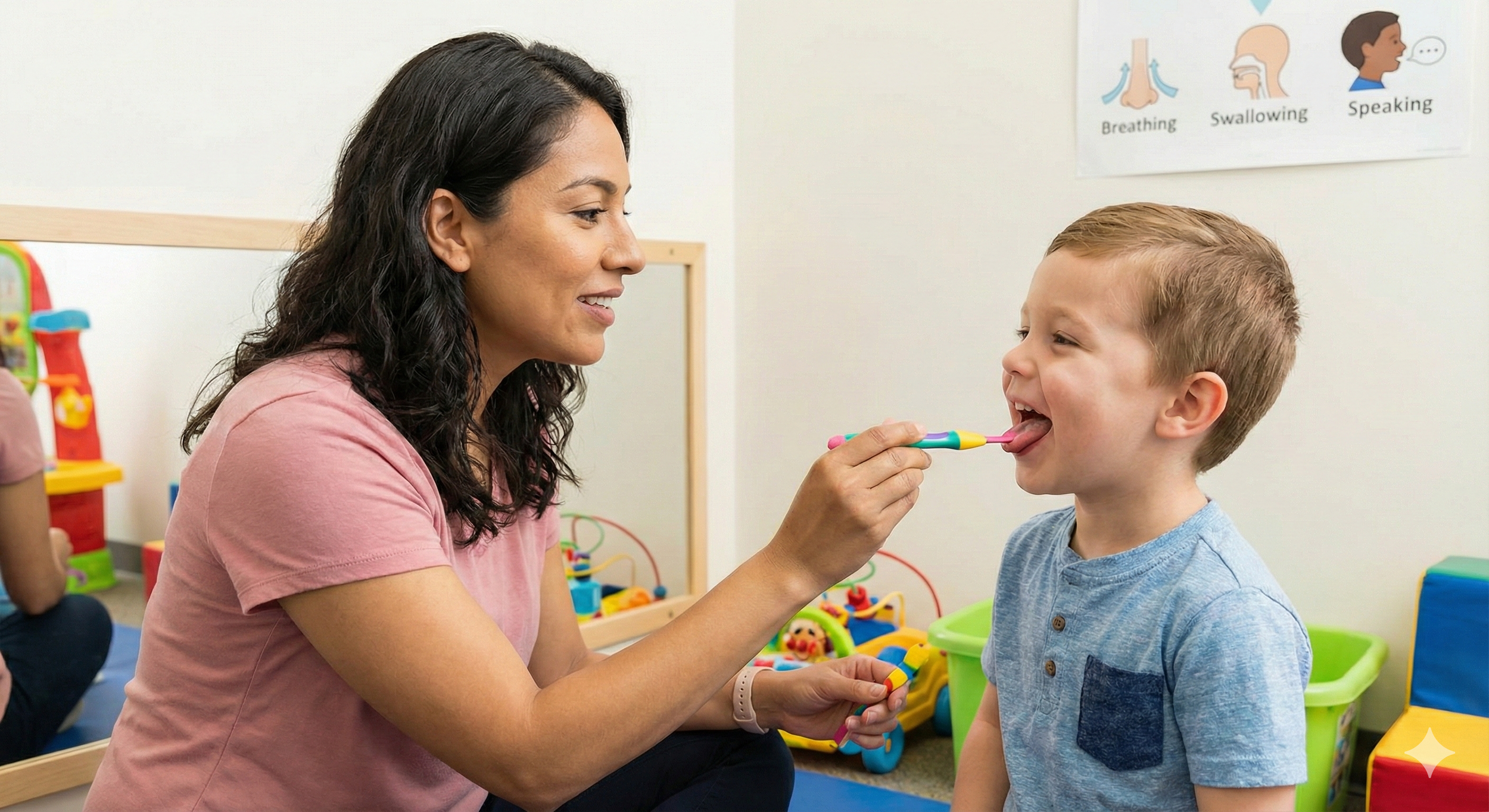
Orofacial Myofunctional Therapy (OMT), or Myo therapy, focuses on retraining the muscles of the face, mouth, and tongue to work properly. Through targeted exercises, it addresses orofacial myofunctional disorders (OMDs) to enhance critical functions such as breathing, swallowing, and speaking.
What Are Orofacial Myofunctional Disorders (OMDs)?
Orofacial Myofunctional Disorders (OMDs) are simply improper habits involving the muscles of your child's face and mouth. These problems develop when a child's tongue, lips, or jaw learns an incorrect way to move or rest.
The most common OMD we see is a tongue thrust. This is when your child's tongue pushes forward against or between their teeth when they swallow, speak, or even just rest. Instead, the tongue should be resting gently on the roof of the mouth (the palate).
When these muscle habits are incorrect, they can lead to a domino effect of other issues for your child, including:
Speech Problems: Difficulty saying certain sounds, like a lisp ("s" or "z" sounds).
Dental Issues: The constant pressure can push teeth out of alignment, creating an "open bite" (a gap between the top and bottom front teeth) or causing teeth to shift back after braces.
Swallowing Difficulty: May lead to messy or picky eating.
Breathing Issues: Often linked to chronic mouth breathing (instead of nasal breathing), which can affect sleep, energy levels, and even facial development.
Myofunctional therapy is the solution to these issues. Think of it as physical therapy for the mouth. Through a series of simple, and often fun, exercises, we help retrain your child's muscles. We work with them to build new, healthy habits for how to rest their tongue, swallow correctly, and speak more clearly.
What Causes OMDs?
Orofacial Myofunctional Disorders (OMDs) rarely have just one cause; they are usually a result of poor habits and physical factors that teach the mouth muscles the wrong way to work.
The main culprits we see in children are:
Habits That Last Too Long: Thumb, finger, or pacifier sucking that continues past the toddler years (age 3 or 4) can physically push the teeth and train the tongue to rest incorrectly.
A Blocked Airway: If your child can't breathe comfortably through their nose due to enlarged tonsils, adenoids, or constant allergies, they become a mouth breather. This forces the tongue down, where it can't rest properly on the roof of the mouth.
Structural Issues: Sometimes, a child has a tongue-tie (a tight band under the tongue) or other small differences in their jaw or facial structure that make it hard for the tongue to move or rest in the right place.
Signs Your Child May Benefit From an Oral-Motor or Airway Evaluation

Many children go through phases with breathing, eating, or speech—but sometimes certain patterns can signal that a little extra support may be helpful. You might notice:
Mouth breathing, especially during rest or sleep
Tongue pushing against or between the front teeth
A low-resting tongue posture
Speech differences, such as a lisp or difficulty with sounds like t, d, n, and l
Changes in dental alignment, including an open bite or shifting teeth
Thumb- or pacifier-sucking continuing past age 3–4
Messy eating or ongoing drooling beyond age two
Snoring, restless sleep, or waking unrefreshed
Facial tension when swallowing
Headaches, earaches, or jaw discomfort
What are the benefits of Myofunctional Therapy?
Myofunctional Therapy supports more than just your child’s muscles and habits—it can make day-to-day life easier for the whole family. Parents often notice:
Greater peace of mind, knowing you’re addressing the underlying cause of breathing, eating, or speech challenges
Smoother daily routines once habits like thumb-sucking or mouth breathing begin to fade
More restful nights for everyone, as your child breathes and sleeps more comfortably
Lower risk of orthodontic relapse, which can help reduce future dental costs
Less stress around mealtimes, communication, and transitions as your child becomes more regulated and confident
A happier, more comfortable child, which naturally brings more ease to your home
These benefits create a calmer, healthier family environment where your child—and everyone around them—can thrive.
Contact us to schedule a free 15 minute consult
If you're thinking about Myofunctional Therapy, we're here to help. Schedule a consultation to discuss your concerns, get your questions answered, and find the best plan for your child.
Call or text: (818) 723-4234
Click to email: 📧 info@kmspeechtherapy.com